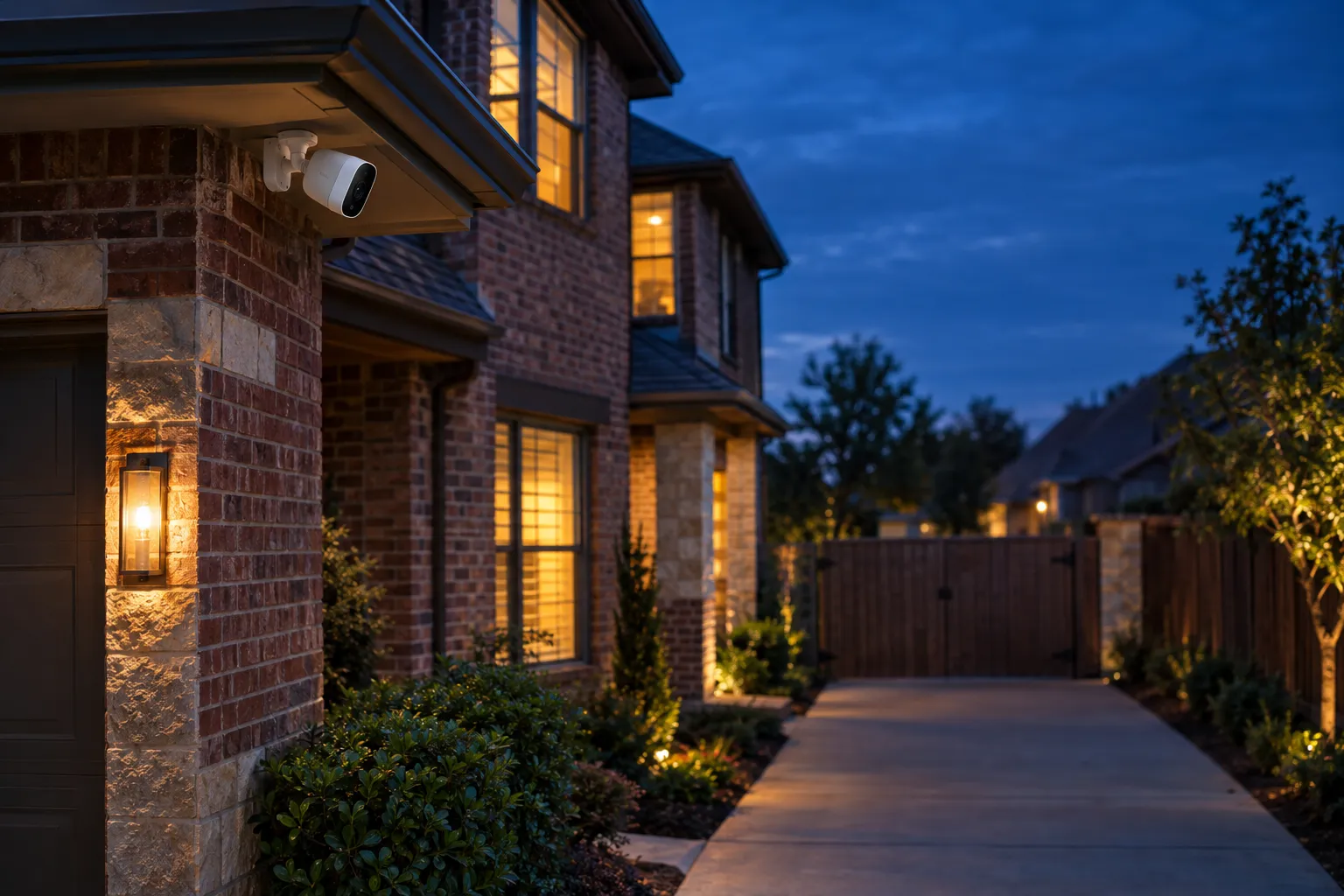
The usual mistake isn't buying the wrong camera. It's putting a good camera in a spot that doesn't help. A doorbell camera that shows the porch light and half a face. A driveway camera that sees the cars but not the person walking up beside them. A backyard camera pointed at the lawn instead of the gate.
The fix is to think about your home the way someone casing it would. Where would they walk up? Where would they stand where nobody can see them from the street? That's where coverage belongs.
Start with how someone would walk up
Walk your property from the street, then from the alley or back fence if you have one. Note every path to a door: the sidewalk, the driveway, the side yard, the gate. A camera that watches an approach path catches someone on the way in. A camera that only watches a door catches them once they're already there.
The spots that matter most
The front door. A doorbell camera is a good start, but only if it can see a face. Check yours at night. If it shows mostly porch light, it needs a better angle or a second camera that covers the walkway.
The driveway and parked cars. Aim to see a person between the cars and the house, not just the cars. If you park on the street, cover the curb too.
The back door and back yard. Back doors can't be seen from the street, which is exactly why they matter. Cover the door and the path to it.
Side gates and side yards. These are the dark, narrow spaces nobody looks at. A camera here often catches what the front cameras miss.
The garage service door. The small door into the garage is easy to forget and often the least watched door on the house.
Shops, barns and outbuildings. On acreage, tools and equipment live in buildings away from the house. Cover the doors and the drive that leads to them.
Inside, if you want it. Indoor cameras work well on entryways and main living areas, where you want them. Never in bathrooms or bedrooms.
Light, height and weather
Night is the real test. Many homes have dark zones: side yards, alleys, carports and the spaces between outbuildings. Look at your home after sunset before you pick spots. Bright porch lights shining straight into a lens can wash out the picture, so angle matters as much as placement.
Height. Mount cameras high enough that nobody can reach up and turn them, but low enough to see a face, not just the top of a cap.
Weather. Oklahoma wind, hail and storms are hard on anything mounted outside. Under an eave or overhang is usually the best spot for an outdoor camera. It protects the camera and cuts glare from rain and sun.
Power and Wi-Fi come first
A camera can only go where it can get power and a strong signal. Wireless cameras on a weak Wi-Fi connection drop out, lag or slow down the rest of your network. During our assessment, we check signal strength at every camera spot. If your network needs help first, we'll tell you before anything is mounted.
Privacy and the audio question
Point cameras at your property, not into a neighbor's windows or yard. It's the right thing to do, and it avoids problems later.
Video and audio follow different rules. Oklahoma lets you record a conversation you're part of. A camera that records other people's private conversations when you aren't part of them is a different story under state law. (Oklahoma Statutes, 13 O.S. § 176.4) Many people turn audio off on some cameras for that reason. We'll set audio to match how you use each camera. If you have a specific legal question, ask a lawyer.
Cameras work better with an alarm
A camera tells you what happened. A monitored alarm gets someone to respond. Put together, an alert comes with video, so you know whether it's the dog, a delivery or something worth calling about. We install camera-only systems too, and they can connect to an alarm later.
Already have cameras?
We install and service the brands most Oklahoma homeowners use, including ADT, Alarm.com, Ring, Google Nest, Arlo, Lorex and Reolink, and we can often work with cameras you already own. If yours are worth keeping, we'll say so.
What a blind spot analysis looks like
It's part of every free on-site assessment. We walk the outside and inside of your home with you and look at:
- entry points you can't see from the street
- dark zones at night
- what your current cameras actually see
- approach paths: driveway, sidewalk, back fence line, alley
- power, Wi-Fi strength and mounting surfaces at each spot
- privacy, so you cover your property without pointing into a neighbor's windows
You leave with a plan that shows where each camera would go and why, before you commit to anything. See how our camera installs work.
FAQs
How many cameras do I need?
Fewer than most people think, if they're in the right spots. The count comes from your approach paths and blind spots, not a package size.
Should my outdoor cameras record audio?
It depends on where they point and how you use them. Oklahoma law treats audio differently from video. We'll help you set it up.
Can you use the cameras I already have?
Often, yes. We'll check them during the assessment and tell you honestly whether they're worth keeping.